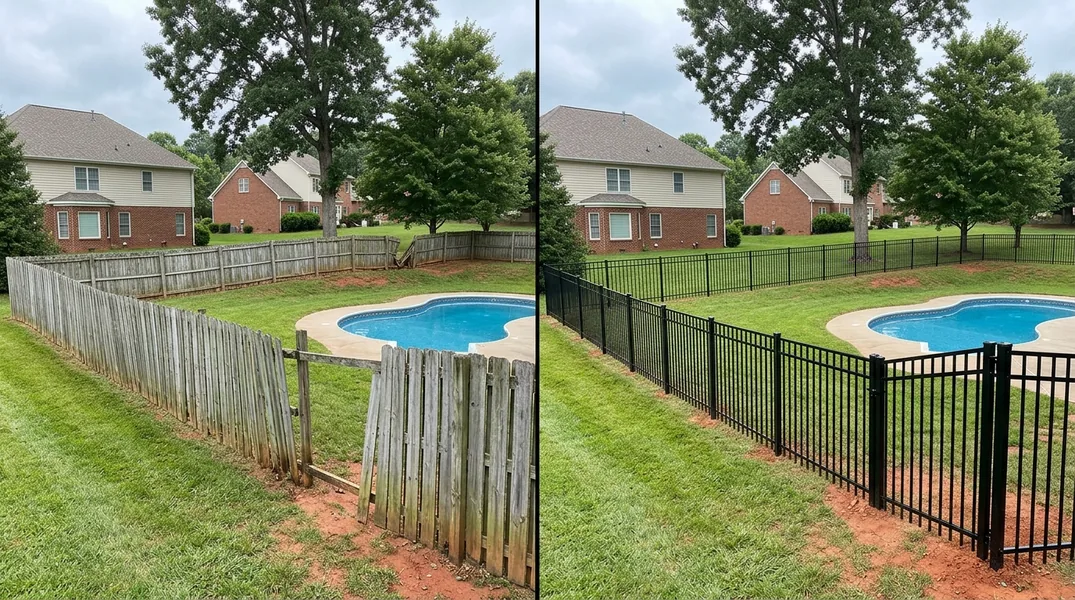
Why Pool Fence Codes Matter in North Carolina
If you own a swimming pool in Winston-Salem, you're responsible for meeting North Carolina's pool safety regulations. These aren't suggestions or guidelines; they're legal requirements designed to prevent drowning and unauthorized access, especially for young children. Failure to comply can result in fines, liability issues if someone is injured on your property, and complications when selling your home.
North Carolina follows the International Swimming Pool and Spa Code (ISPSC), which sets minimum standards for pool barriers, gates, and safety equipment. Winston-Salem homeowners must understand these rules before installing or upgrading a pool fence. Whether you're building a new pool or updating an existing one, knowing the exact requirements will save you time, money, and potential legal headaches down the road.
Pool Fence Height Requirements: How Tall Does It Need to Be?
One of the most common questions homeowners ask is about pool fence height requirements. In North Carolina, the minimum pool fence height is 4 feet measured from the ground on the pool side of the fence. This height is measured vertically from the finished grade (ground level) to the top of the fence material itself, not including any decorative elements or caps that extend above the fence line.
The 4-foot minimum applies to all pool barriers, whether you choose Wood & Privacy Fence Installation, Vinyl & PVC Fence Installation, Chain Link Fence Installation, or Aluminum & Ornamental Iron Fencing. This height is specifically designed to prevent small children from climbing over the barrier. Additionally, the fence must be constructed so that there are no openings, gaps, or spaces larger than 4 inches anywhere along the barrier. This includes spaces between vertical slats, under the fence line, or at the gate. A 4-inch ball must not pass through any opening in the fence structure.
Self-Closing Pool Gate Requirements: What You Need to Know
A self-closing pool gate is one of the most critical components of a compliant pool fence system. North Carolina code requires that any gate providing access to the pool area must be self-closing and self-latching. This means the gate should automatically swing closed and latch shut on its own, without requiring a person to manually close or latch it every time someone passes through.
The self-closing mechanism must operate reliably in all weather conditions and must be tested regularly to ensure it functions properly. The latch itself should be positioned at least 54 inches above the ground and should not be accessible to small children. The gate cannot be propped open, wedged, or held open by any means. If you have an existing pool fence with a standard hinged gate, upgrading to a self-closing, self-latching gate may be necessary to meet current code requirements. When working with a professional fence installer near you, always confirm they understand these gate specifications and can source or install compliant hardware.
Additional Pool Barrier Requirements Beyond Height and Gates
North Carolina's pool safety code covers much more than just fence height and gate function. The entire pool barrier system must form a complete enclosure around the pool. This means there cannot be any gaps or weak points where a child could squeeze through or climb under. If your pool is adjacent to your house, the house wall itself can serve as part of the barrier, but only if doors and windows leading to the pool area have proper safety measures in place, such as alarms or self-closing, self-latching doors.
Ladder access is another important consideration. Any removable ladder used to enter an above-ground pool must be removed when the pool is not in use, or the ladder must be stored in a locked position. For in-ground pools, ladders and stairs must be equipped with self-closing, self-latching gates or barriers. Additionally, North Carolina requires that pools have a drain safety system that complies with the Virginia Graeme Baker Pool and Spa Safety Act. This federal requirement prevents entrapment hazards caused by suction from pool drains. When you're planning your pool fence installation, discuss all these components with your contractor to ensure your entire pool area meets every applicable safety standard.
Choosing the Right Fence Material for Your Pool Barrier
When selecting materials for your pool barrier, you have several options, and each has advantages and disadvantages. Wood & Privacy Fence Installation provides a classic, attractive appearance and offers good privacy. However, wood requires regular maintenance, including staining, sealing, and repairs to prevent rot and warping, especially in North Carolina's humid climate. Wood fences can also develop gaps over time as boards shrink or shift, so they need careful inspection to remain code-compliant.
Vinyl & PVC Fence Installation has become increasingly popular for pool barriers because it requires minimal maintenance, resists rot and insect damage, and maintains its appearance for many years. Vinyl fences are durable and hold their shape well in various weather conditions. Chain Link Fence Installation is often the most economical option and is highly functional, though it offers less privacy. Aluminum & Ornamental Iron Fencing provides an elegant look with low maintenance requirements and excellent durability. Regardless of which material you choose, ensure that it meets the 4-foot height requirement, has no openings larger than 4 inches, and can accommodate a self-closing, self-latching gate. The best choice depends on your budget, aesthetic preferences, maintenance willingness, and local climate considerations.
Getting a Professional Pool Fence Installation: Next Steps for Winston-Salem Homeowners
Installing a compliant pool fence is not a task to take lightly or to attempt without proper knowledge of local codes. Mistakes can be costly, both in terms of having to redo the work and in potential legal liability. That's why working with an experienced, local fence contractor is essential. A professional installer will know North Carolina's specific requirements, understand how they apply in Winston-Salem, and ensure your fence meets every detail of the code.
Before you commit to any fence contractor, ask them directly about their experience with pool fence installations and their familiarity with North Carolina code requirements. Request references from previous pool fence projects. Discuss the specific materials you're interested in, the layout of your pool area, and any aesthetic preferences you have. A reputable contractor will also provide a detailed quote that breaks down materials, labor, and any additional components like self-closing gates or hardware. To get started, contact Winston-Salem Fence at (743) 270-9146 or request a free estimate today. Our team understands local pool safety regulations and can help you design and install a fence that protects your family while meeting all applicable codes.
Looking for a professional fence contractor in Winston-Salem? Winston-Salem Fence responds fast for all your fence needs.
Get a Free Quote